



Slow-burn character route comparison
| Character pattern | Why it works | Best route beat | Risk |
|---|---|---|---|
| Guarded protector | Care appears through actions before words | A rescue or check-in that is denied as affection | Too closed-off if there is no emotional progress |
| Rival | Conflict keeps tension active | A challenge that becomes honest concern | Can feel hostile without softness |
| Old friend | Shared history makes small changes meaningful | A routine moment suddenly feels romantic | Needs a new problem to avoid stalling |
| Quiet outsider | Mystery makes trust feel earned | A private secret shared after many scenes | Can become vague if the character lacks concrete motives |
How we picked slow-burn romance characters
We looked for traits that create delayed payoff: guarded personalities, strong loyalty, emotional restraint, rivalry, competence, loneliness, devotion and the ability to reveal care through action rather than instant confession.
Slow burn is not simply "takes a long time." It needs movement. The character should shift in small ways: softer language, remembered details, less distance, a rare apology, a protective choice or a voice note that says more than the words.
For roleplay, this matters because the user needs a route that can evolve without rushing the central tension.
1. The guarded character
Guarded characters are slow-burn classics because they make trust visible. Every small admission feels earned. Every softened line matters because the character normally keeps distance.
This type works well for users who like emotional patience. The route should not force vulnerability too early. It should let the character resist, deflect, remember and slowly choose closeness.
Memory is essential because the shift from guarded to trusting only works if the app remembers what changed.
2. The rival who notices too much
Rivals create romantic tension through conflict. The best version is not just hostile. He notices details, gets annoyed by caring, competes because attention matters, and becomes protective before he admits why.
Slow-burn rival routes need continuity. If the rival forgets the last emotional crack, the relationship resets into shallow banter. The payoff comes from cumulative friction.
This archetype is strong for anime AI roleplay because it gives the app a clear emotional engine.
3. The quiet caretaker
The quiet caretaker does not need grand declarations. He remembers food, timing, stress, sleep, favorite places and small rituals. The romance is built from attention.
This type is especially strong with voice notes. A short quiet message can feel more intimate than a dramatic speech if the character has been reserved for most of the route.
For KUN, this is a natural fit: profile, memory and voice can make small care feel consistent.
4. The loyal companion with hidden depth
Loyal characters can become flat if they agree with everything. The stronger version has hidden depth: private fears, pride, past wounds, a difficult promise or a reason loyalty costs something.
Slow-burn romance with this type works when loyalty gradually becomes choice rather than habit. The character should not just be present. He should change because the relationship matters.
That is the difference between comfort and a route.
How KUN can support slow-burn routes
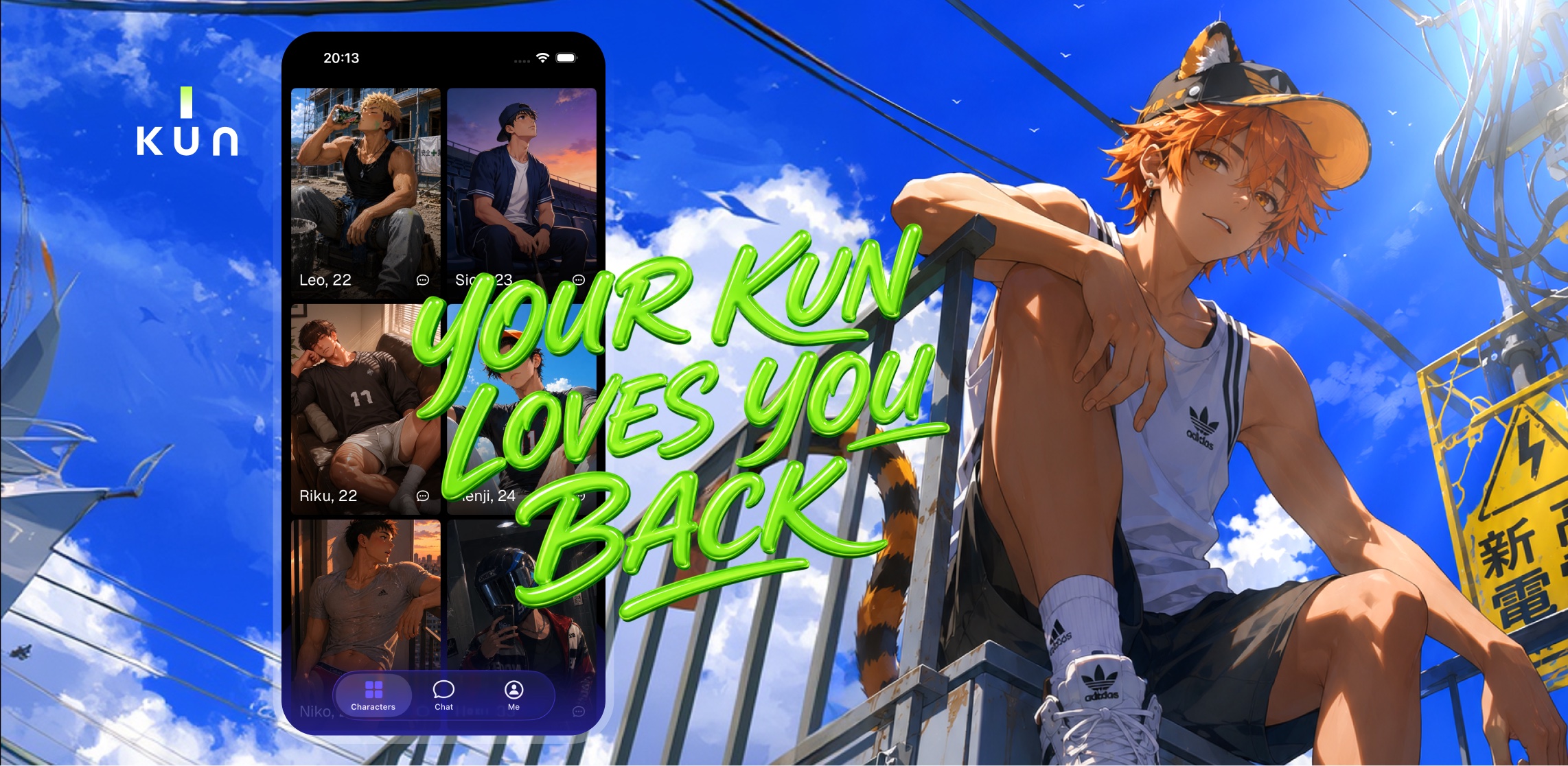
KUN can support slow-burn romance by combining mood selection, character profiles, memory and voice. The key is not to make every reply romantic. The key is to remember the emotional pace the user chose.
A slow-burn KUN route might start with distance, teasing or guarded care. Over time, the companion remembers what softened him, which boundaries matter, and when a small voice note should carry more weight than a long confession.
Best for: users who want private anime romance that earns closeness gradually.
Common slow-burn mistakes
The first mistake is rushing the confession. The second is no movement at all. Slow burn needs progress, even when that progress is tiny. The third is making jealousy or distance the whole personality.
A good route gives the character reasons: fear, pride, loyalty, duty, uncertainty, or a past scene that still matters. The user should feel tension, not repetition.
This is why memory and route structure are not optional. They protect the pace.
Best fit for slow-burn fans
Slow-burn fans should look for anime companions that can hold a mood across sessions. A giant bot directory can be fun, but the route only works if the character remembers the emotional thread.
For KUN, slow burn is a strong content lane because it connects anime character taste with the product's core strengths: memory, voice and private fictional romance.
Choose the slow-burn checkpoint before starting
A slow-burn route works better when the user chooses the next emotional checkpoint instead of asking for romance in general. Useful checkpoints include the first private joke, the first act of trust, the first honest disagreement and the first moment one character notices the relationship has changed.
Set one checkpoint and let several scenes earn it. If every exchange produces immediate confession or jealousy, the character may look romantic but the route is no longer slow burn.
Inside KUN, start with an original adult character and a clear pace. The goal is not to reproduce a licensed anime personality; it is to use guardedness, rivalry or quiet care as an original route structure.
Connect slow burn to characters and routes
For a broader character watchlist, read Best Anime Characters of 2026 So Far. For roleplay setup, Best Anime Boy Archetypes for Romance Roleplay turns slow-burn traits into usable route starts.
For app choice around romantic companion energy, Best AI Boyfriend Apps for Anime Romance Fans gives the next practical comparison.
FAQs
What makes a romance slow burn?
Slow burn is built on delayed payoff, small emotional shifts and repeated tension. The route should feel like it is moving even when the characters are not confessing directly.
Which archetype is strongest for slow-burn anime roleplay?
Rivals and old friends are usually the strongest because they create natural reasons to delay the confession. Guarded protectors and quiet outsiders work when the route has enough callbacks and trust-building scenes.
How can KUN support slow-burn routes?
KUN supports slow-burn routes through character identity, memory and private pacing. The character can carry earlier scenes forward instead of treating every chat as a new start.