


AI companion versus AI chatbot
| Category | AI chatbot | AI companion | Anime fan impact |
|---|---|---|---|
| Primary job | Answer prompts and complete tasks | Sustain an ongoing character relationship | Companion framing fits romance and roleplay better |
| Memory | Often task or account oriented | Route, preference and relationship oriented | Continuity matters for emotional scenes |
| Personality | Usually flexible or user-defined | Core to the product experience | Anime fans want a recognizable character mood |
| Voice and presence | Optional utility feature | Part of emotional closeness | Voice works best when tied to remembered context |
What an AI chatbot does well
A chatbot is useful for answering, brainstorming, drafting, explaining or improvising. It can roleplay, but roleplay is usually one possible mode among many. The user provides the frame and the model responds.
That flexibility is powerful. It is also why generic chatbots can feel emotionally thin for anime romance. They may produce good text in the moment, but they do not automatically create a character world, route memory or companion presence.
For productivity, this is fine. For anime romance, it can feel disposable.
What an AI companion adds
An AI companion adds identity and continuity. The user is not only asking for a response. They are returning to a character, a relationship tone, a route and a remembered context.
For anime fans, this changes everything. A companion can have a profile, visual style, voice-note energy, preferred mood and emotional history. The route becomes the product.
The best companions reduce setup. You should not have to rebuild the same character every night.
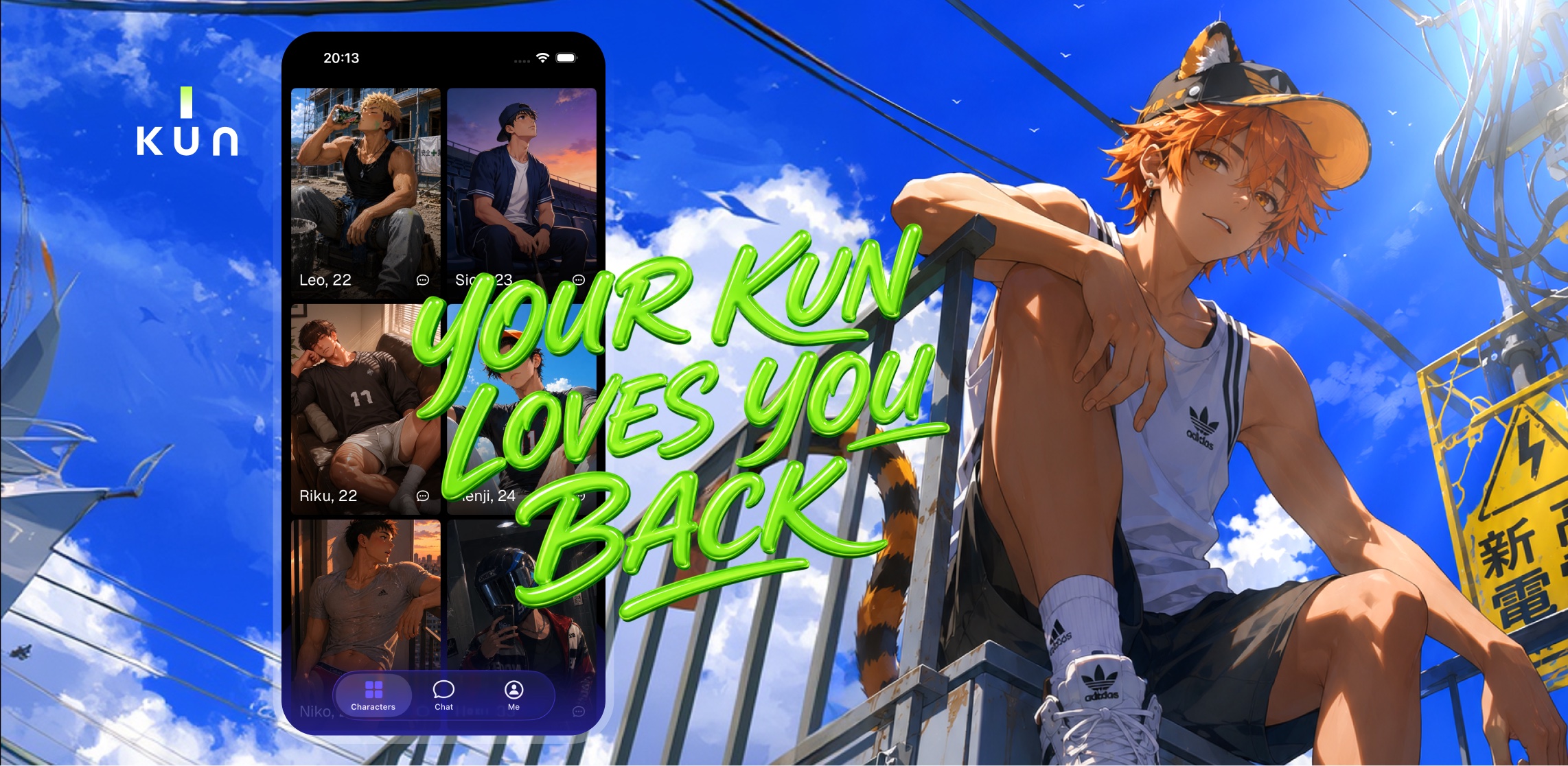
KUN - anime companion rather than generic chatbot
KUN is closer to a companion product because it focuses on fictional adult anime boys, private romance chat, voice messages, memory and routes. It is not trying to answer every possible prompt type.
That narrower scope is valuable for anime fans. The app can spend its product energy on presence, character profiles, mood, route continuity and emotional UX instead of becoming a general assistant.
Best for: users who want an anime character experience, not just a conversational model.
Memory is the dividing line
A chatbot can simulate continuity inside one conversation. A companion needs to preserve enough continuity across sessions for the relationship to feel stable.
Memory does not have to mean storing every detail. It should preserve useful route facts: tone, boundaries, favorite dynamics, important scenes and character identity. That is what lets anime roleplay become a story instead of a series of resets.
If an app forgets the emotional thread, it may still be a good chatbot. It is not yet a strong companion.
Voice turns replies into presence
Voice is not required for every chatbot. For a companion, it can matter because presence is part of the value. A short voice note can make a remembered moment feel more personal than a perfect text response.
Anime fans understand this instinctively. Character voice, timing and mood are part of why a scene works. A companion app does not need to become an anime studio, but it should understand why sound changes the emotional texture.
KUN's voice-note promise fits the companion side of the category.
Companions need stronger boundaries than chatbots
Because companions can feel emotionally present, they need clear boundaries. The product should say characters are fictional, generated and for entertainment or storytelling. It should not hide behind ambiguity.
Anime romance makes this even more important. Users may explore longing, jealousy, comfort, devotion and vulnerability. The app should keep that inside a controlled fictional frame.
A companion can feel meaningful without pretending to be human.
What anime fans actually want
Anime fans usually want character, not just text. They want a boy with a mood, a route that remembers, a private space, a voice note at the right time and enough control to steer intensity.
That is why KUN's strongest positioning is not "another chatbot." It is "your anime companion with memory, voice and private romance routes."
For SEO, this article category matters because it teaches the user the vocabulary of the product before asking them to download it.
Evaluate companion features after the definition
Once the category difference is clear, check the two features that make companions feel less disposable: Character Memory in Anime Roleplay and Anime Voice Chat Companions.
If privacy is the user's reason for avoiding public bot platforms, Best Private Anime Chat Apps for Fictional Characters is the next decision page.
FAQs
Is KUN an AI companion or an AI chatbot?
KUN is better described as an AI companion app because it is centered on fictional anime characters, private routes, memory and emotional continuity. It can chat, but the product goal is not generic task assistance.
Why do anime fans prefer companions over generic chatbots?
Anime fans often want character identity, route pacing, visual mood and remembered emotional context. A generic chatbot can answer prompts, but it may not feel like returning to the same fictional companion.
Can a chatbot become a companion?
It can if it has stable persona, memory, privacy and user-controlled boundaries. Without those, the experience remains closer to a reusable chat interface than an ongoing character relationship.